
Today, I’m wearing my historian hat for the blog post. As you all know, on July 4, 2026, we Americans will celebrate the 250th birthday of the nation’s founding.
The fact that we commemorate July 4, 1776, says something about the profoundly hopeful and aspirational nature of the people of the United States. July 4 was not the day we actually achieved our independence. That was September 3, 1783, when the Treaty of Paris secured U.S. status as a sovereign nation and delineated its borders. On that day, Great Britain formally relinquished its claims on the thirteen North American colonies that had joined in signing the Declaration of Independence in 1776.
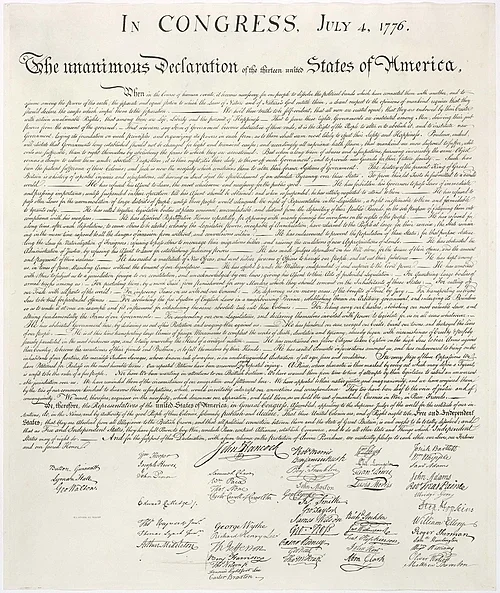
Instead, we celebrate the day we declared our DESIRE to be independent of our British rulers, not the day when we achieved that independence. We celebrate the day when 56 delegates to the Second Continental Congress in Philadelphia signed a document that outlined their grievances with the King and Parliament. And more important, they laid out a theory of government that derives its power from the consent of the governed, one which also articulated a claim to universal human rights. And while the signers didn’t really mean to give those human rights to everyone living in the borders of the new nation, they opened a door to extending basic human rights and citizenship to all people. What could be more aspirational than that?
This is a good time to review that aspirational founding document, the Declaration of Independence, especially if, like most of the non-historians out there, you haven’t read it since high school or college. The text is easily accessible at the National Archives website.
And if you want to learn more about this remarkable document, I have two recommendations for your reading or listening list (both are available in print, ebook, or audio format):
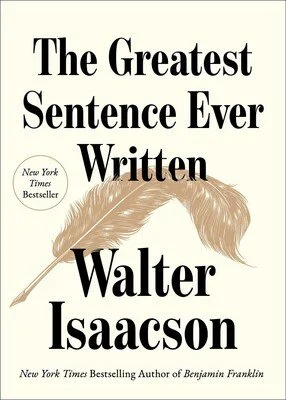
My first suggestion is Walter Isaacson’s The Greatest Sentence Ever Written. It’s compelling and super short. (The print version is only 80 pages, and I listened to the audio book in about an hour.) Isaacson dives deeply into the underpinnings of this sentence, “We hold these truths to be self-evident, that all men are created equal, that they are endowed by their Creator with certain unalienable Rights, that among these are Life, Liberty, and the pursuit of Happiness.” He unpacks the Founders’ debates about the wording of the sentence, the origins of the ideas it expresses, and its weighty implications for our nation. (I thank the folks at Taking Care of Business Books for putting this title on my radar screen.)
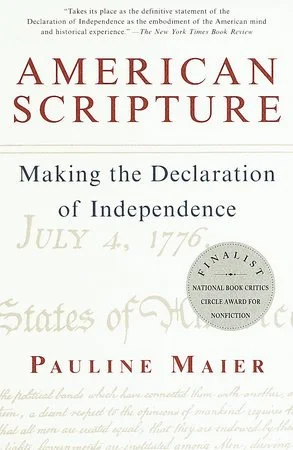
If you’re up for something a bit longer, check out the late Pauline Maier’s book, American Scripture: The Making of the Declaration of Independence. I sometimes used this relatable 1997 book in my upper level courses on the Revolutionary Era, and I still think it’s the best account of the document’s origins and significance. Maier traces the drafting and debating of the Declaration and also the ways it became a profound, almost sacred, symbol to future generations of Americans.
Let me know what you think of these books or drop your own suggestions of essential reading for the 250th in the comments.